

PRIVATE ON-PREMISE AI
Private on-premise AI for companies
An AI assistant that runs inside your company network, on your servers or on dedicated hardware, not on the internet. It answers from your company data, and questions and answers stay inside your internal network.
Pronet Design, a software development company based in Sibiu, Romania, has been building applications and integrations for Romanian companies since 2017, including integrations with Priority ERP, SeniorERP and Nexus ERP.
Public AI sends your data outside the company. Private AI keeps it inside your network.
Employees already use public AI assistants, and part of what they type there is company data: prices, customers, contracts. Bans are hard to enforce. A private assistant gives people the tool without the data leaving the company.
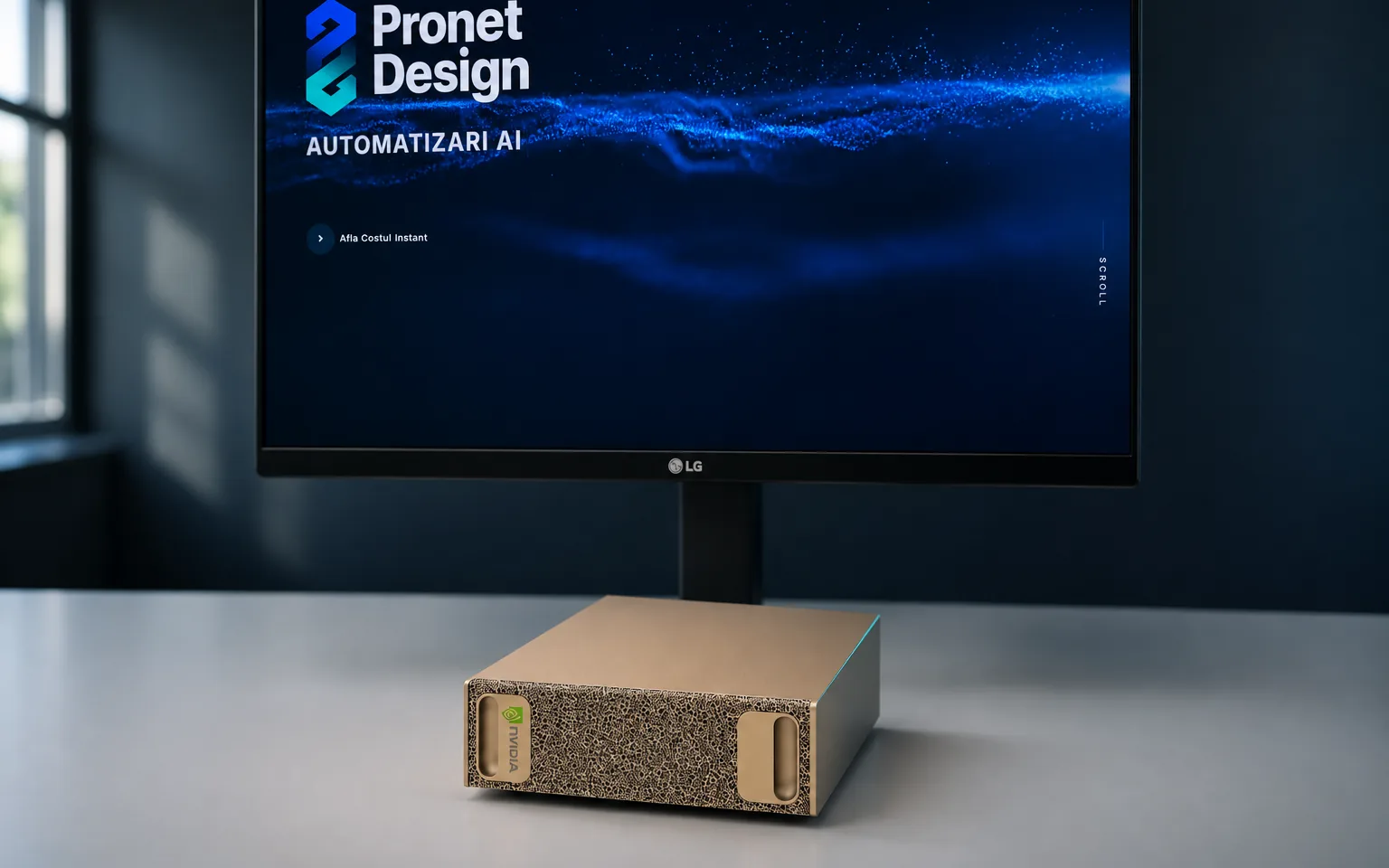
What a local LLM can do in your company
Orders, deliveries and shipping labels, procurement requisitions, supplier orders, prices, stock, customers and suppliers. Ask normal questions. Every answer shows where the information comes from (for example the order number) and comes from company data, not from the model's general knowledge.
Read-only
In the form described here, the assistant changes nothing: it does not write into the application or the ERP. Every operation stays with a person.
Stays on topic
It declines questions unrelated to company data. When it does not have the information, it says so.
Connects to your existing ERP
The assistant reads data through the platform already connected to the ERP, so you don't change the system you work in.
Need agents that prepare orders or check documents? See AI agents and automation →
Case study: local AI assistant for a distribution company in Romania
- Context: for a distribution company in Romania, we built a procurement and logistics platform connected to the company's ERP. A private AI assistant runs on top of it, used by about 40 people.
- Hardware: NVIDIA DGX Spark, a compact computer designed for artificial intelligence.
- Model: Gemma, an open model published by Google. It is downloaded and runs locally, with no connection to Google services.
- Isolation: the hardware has no internet access and only talks to the company's platform.
- Access: logging into the hardware requires a key, and full rights require an additional code from a phone.
- What it does: it answers in the platform's chat from company data, read-only, with each user's permissions and the source of every answer.
- Supplier documents: a document reader runs on the same hardware. It takes supplier invoices and delivery notes (PDF or scanned), extracts the supplier, number, date, items, quantities and prices, and compares them with the purchase order. Differences (for example a lower quantity or a different price) are flagged, and a person checks and approves.
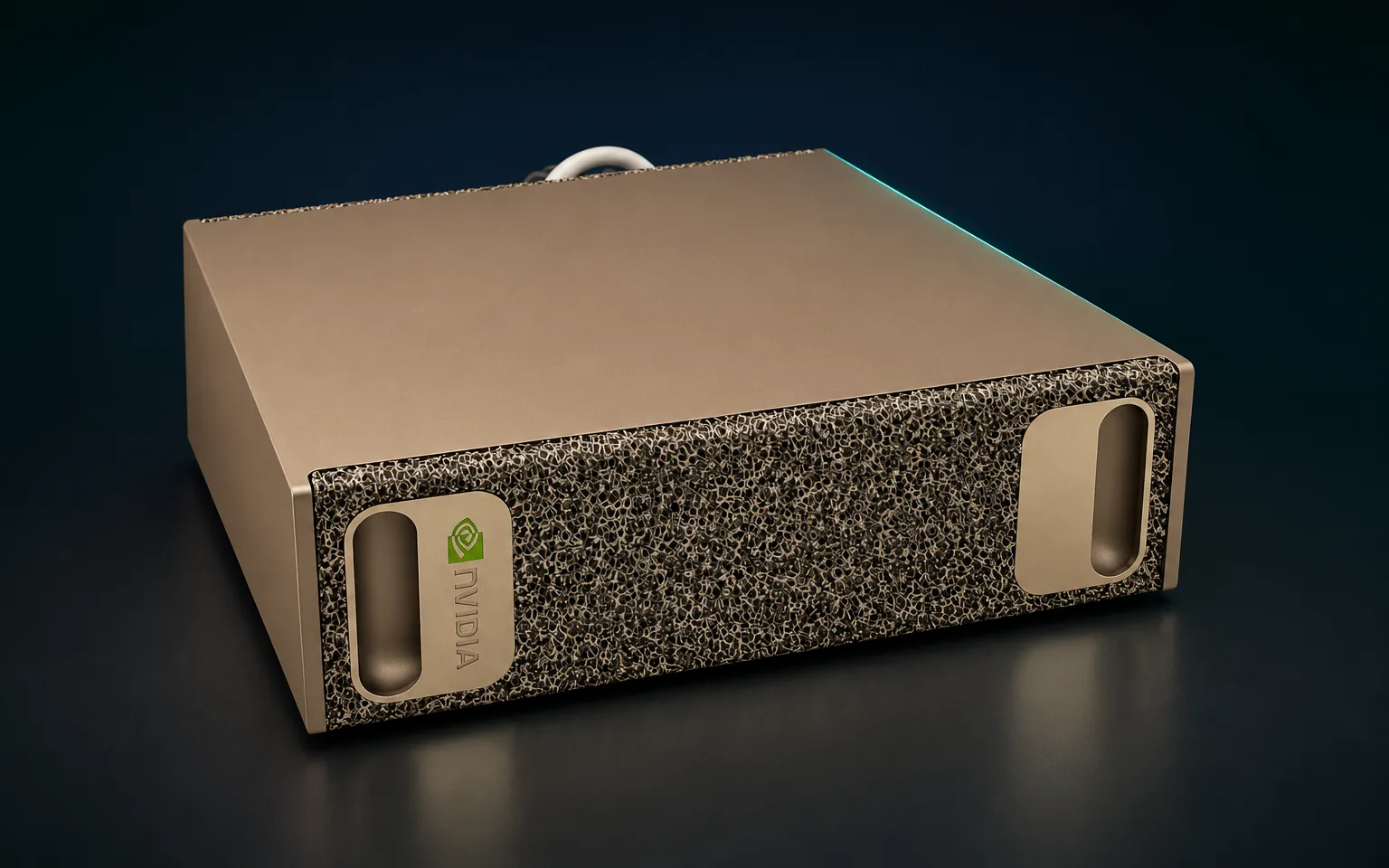
What it runs on: your servers or dedicated hardware
A local LLM needs a GPU and enough memory for the chosen model. Sizing depends mainly on how many people use it at the same time and how much data it processes.
We can run the model on the servers you already have, including multi-GPU clusters, or on dedicated hardware. To start with, or for smaller teams, compact hardware such as NVIDIA DGX Spark or Mac Studio is a realistic starting point. For many simultaneous users or larger models, the solution is sized on a server with several GPUs.
We choose the configuration after the audit, not before. We state the hardware cost in the quote, once we know what you need.
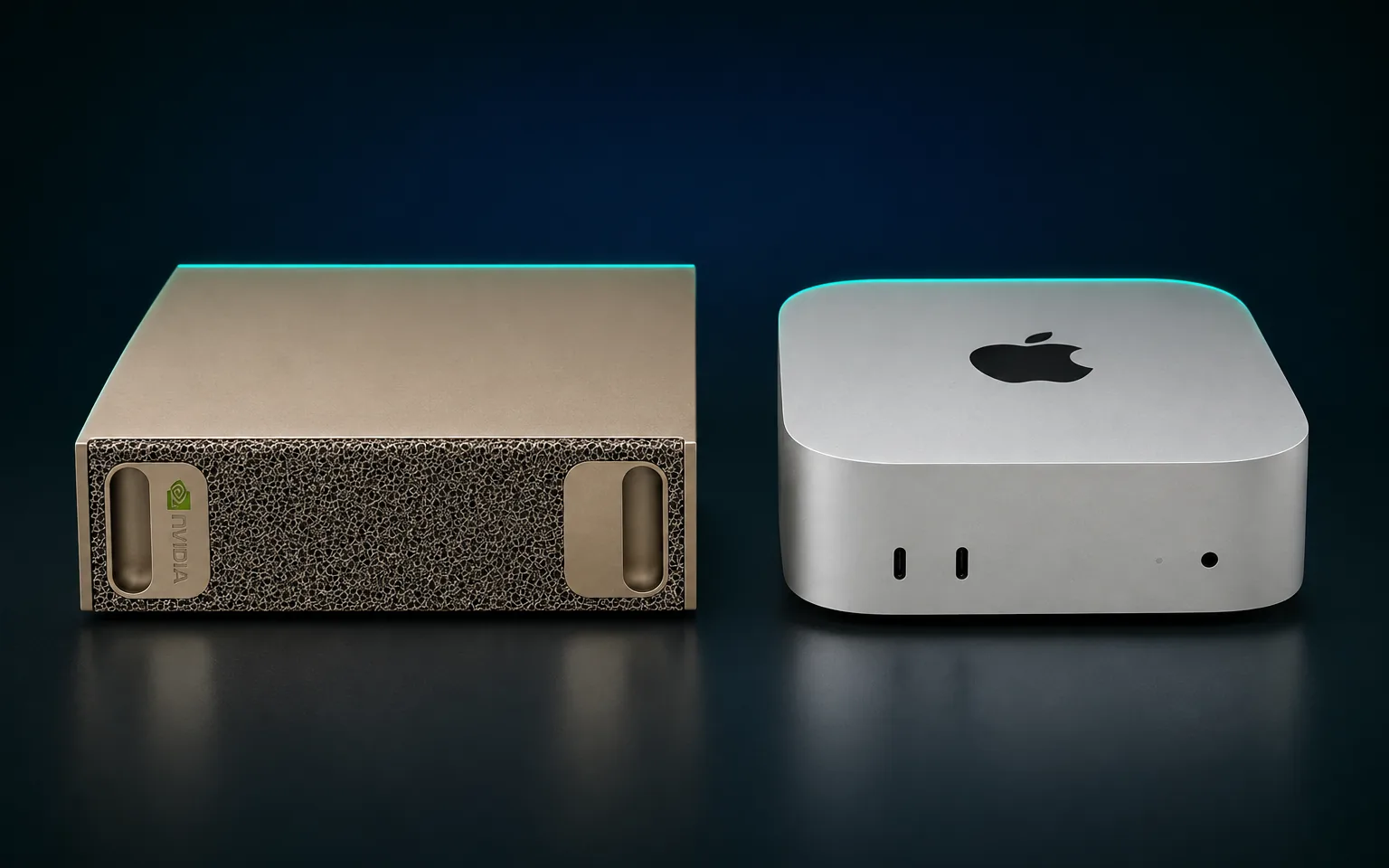
From audit to implementation
Which questions people ask every day and which systems hold the answers.
Audit (paid stage)
Your data, systems and existing infrastructure. You receive the recommended architecture and the quote.
Prototype
We connect the assistant to real data and check the answers together with your team.
Parallel test
The assistant runs alongside your current way of working, with a small group of users.
Installation in your network
On your servers or on the dedicated hardware, with documentation.
Support
We follow up on wrong answers reported by users and adjust. For critical systems, we agree extended support by contract.
Frequently asked questions about on-premise AI and local LLMs
What does on-premise AI mean?
It means the AI model runs inside the company network (on its servers or on dedicated hardware), not on a provider's servers. Questions, the data used and the answers stay inside the internal network.
How is a local AI different from ChatGPT?
A public assistant runs in the cloud and receives everything you type. A private assistant runs locally and answers from your company data, which public assistants cannot access. The difference is where the data goes and what the answers are based on.
Does our data reach Google, OpenAI or any other provider?
No. The model is downloaded and runs locally. During operation, the hardware has no internet access.
How are updates done if the hardware has no internet access?
Updates and maintenance are done in a controlled way, through secure administrative access agreed with your IT team.
What do GDPR and the AI Act mean for a local AI?
The data stays inside your network. We hand over the technical documentation: what data the system uses, who has access, what is logged and where a person reviews the output. With it, your legal counsel or data protection officer (DPO) can carry out the GDPR and AI Act assessment.
Which AI model do you use?
In the implementation described above we use Gemma, an open model published by Google, running locally. The choice of model depends on the hardware and the task, and we can use other open models as well.
Can the assistant change data in the ERP?
No. In the form described here it only reads. We believe any write to the ERP should go through a person who checks and approves it.
Do we have to change our ERP?
No. The assistant connects to the systems you already have. In the implementation described above, the data comes from Priority ERP, through a platform built on top of it.
Who can see what through the assistant?
Each user only gets answers from data they already have access to in the application. The assistant does not bypass existing roles.
What happens if the assistant doesn't know the answer?
It says it doesn't have the information. It declines questions unrelated to company data.
How much does private on-premise AI cost?
The first consultation is free. The audit is a paid stage, and after it you receive the quote. The quote depends on the hardware (or your existing servers), the number of users and how many systems need to be connected. We don't charge a per-user licence.

Let's talk about your processes
Tell us which systems you use and which questions people ask every day. The first consultation is free.
All our services
ERP automation with a private on-premise AI, web design and web applications, SEO and hosting.
Clients We're Proud Of
Long-term partnerships in web design and online store development


